Physiology-Driven Training
Direct breath analysis of peak VO₂, thresholds, and FATMAX. Eliminate the guesswork
Fitness Is a Vital Sign
Cardiorespiratory fitness is one of the most important measurable markers of health, resilience, and performance.
Cardiorespiratory fitness is not just an athletic metric. It is one of the strongest objective markers of how well the body can perform, recover, and adapt. The American Heart Association has argued that fitness should be treated like a clinical vital sign because low fitness is strongly associated with poorer health outcomes, while improvements in fitness matter across the spectrum—from everyday wellness to elite performance.
Yet most people still train without ever measuring it directly. That should change. Serious coaching, smarter programming, and modern wellness assessment should begin with real physiology, not assumptions.
Peak VO₂ / cardiorespiratory fitness is not just for athletes. It is strongly linked to cardiovascular health, all-cause health risk, and long-term wellness. The American Heart Association has argued that fitness should be treated like a clinical vital sign.
Small improvements matter. Improving fitness is meaningful whether the goal is better performance, better health, or both.
The problem: most people train for years without ever measuring the physiology that actually drives adaptation
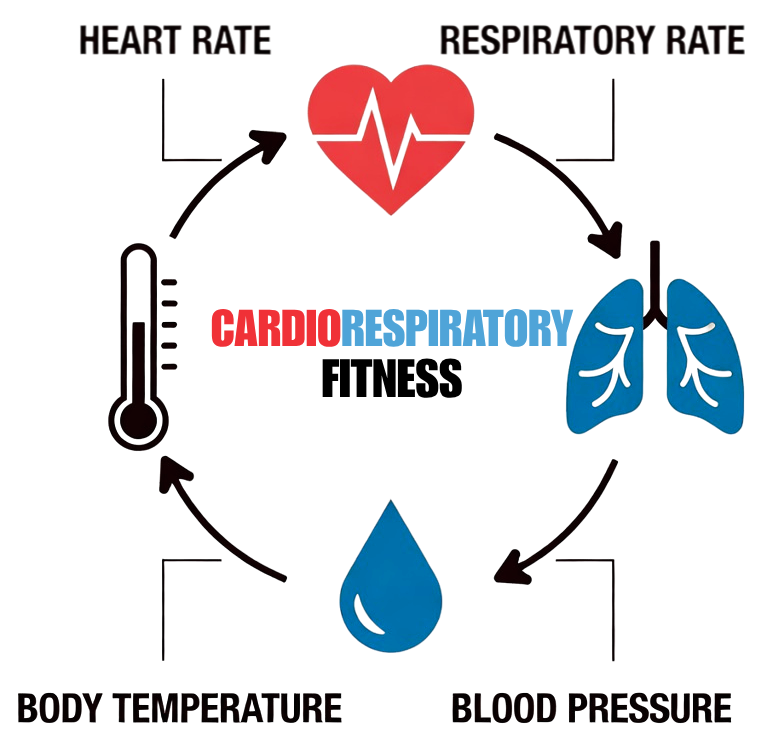

Your Aerobic Engine Defines What You Can Sustain
VO₂ is one of the clearest objective measures of cardiorespiratory fitness—shaping endurance, long-term health, and the real-world activities your body can handle with ease.
First
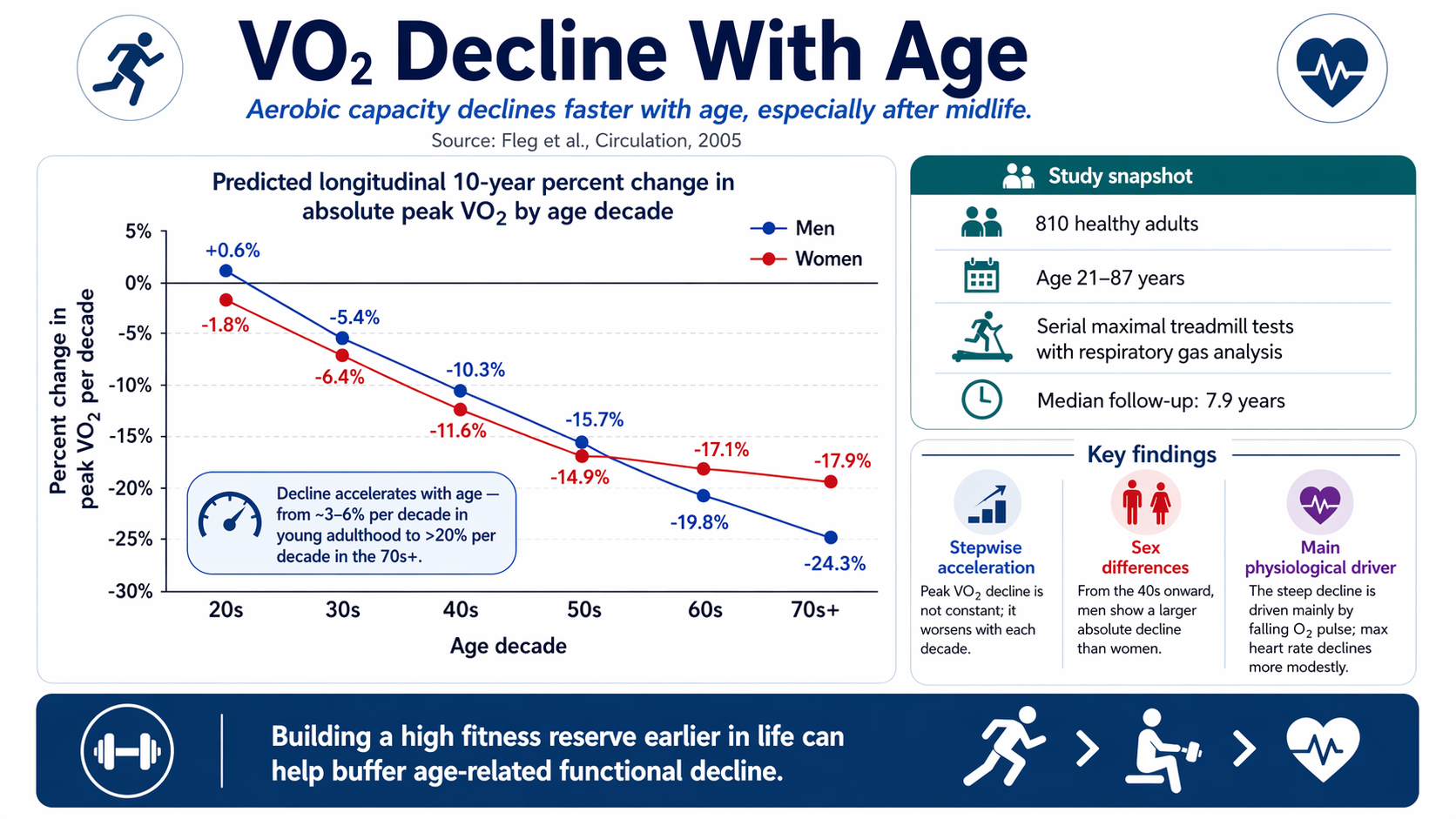
Aerobic capacity changes across life
Second
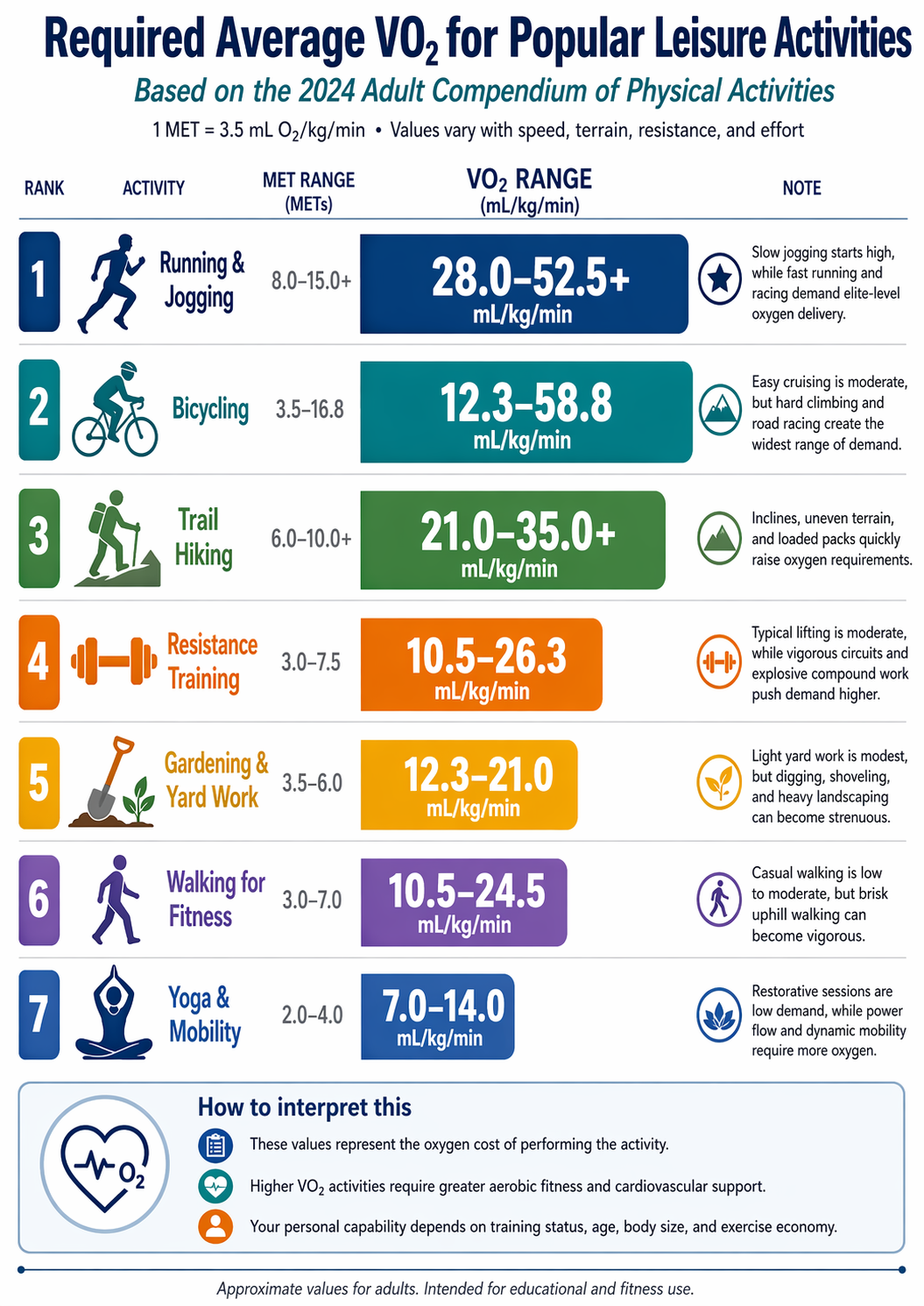
It determines the oxygen cost of what you want to do.

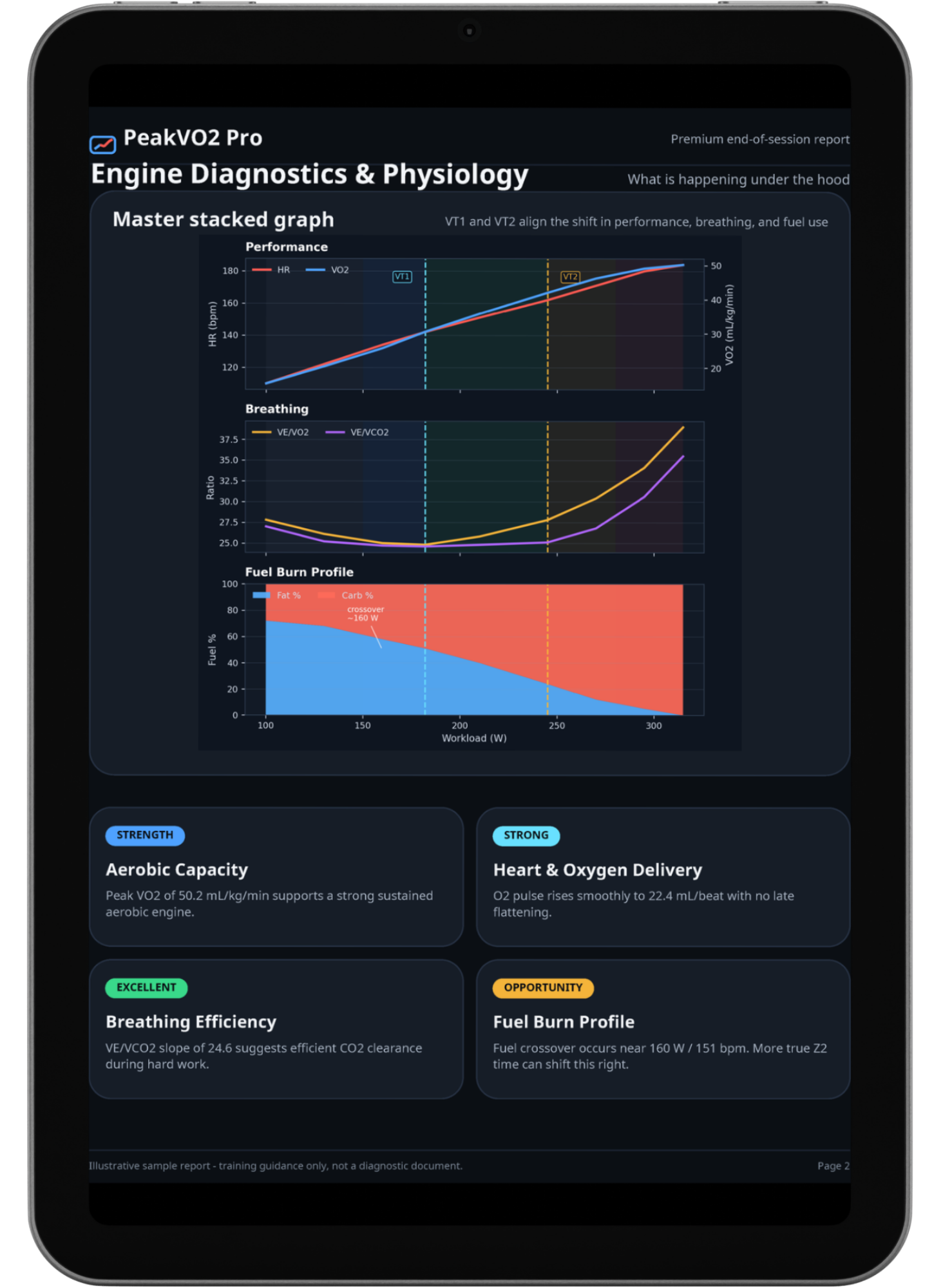
Peak VO₂ Sets the Ceiling. Thresholds Set the Pace.
Together, these metrics explain how much aerobic power you have—and how much you can actually use.
Peak VO₂ measures the size of your aerobic engine. It reflects your highest rate of oxygen use during exercise and sets the upper limit for aerobic performance. But peak VO₂ alone does not tell the whole story.
Thresholds reveal where exercise shifts from easy aerobic work to harder sustainable work, and then to rapidly fatiguing high-intensity work. That is what makes training truly personal. Peak VO₂ tells you your ceiling. Thresholds tell you how much of that ceiling you can actually use.
This is why two people with similar peak VO₂ values can perform very differently. What matters is not only how big the engine is, but how efficiently and sustainably it can be used.
Peak VO₂ = aerobic ceiling
VT1 = upper boundary of easy aerobic work
VT2 = upper boundary of hard sustainable work
Performance depends on peak VO₂, thresholds, and efficiency

FATMAX Shows How You Fuel Work.
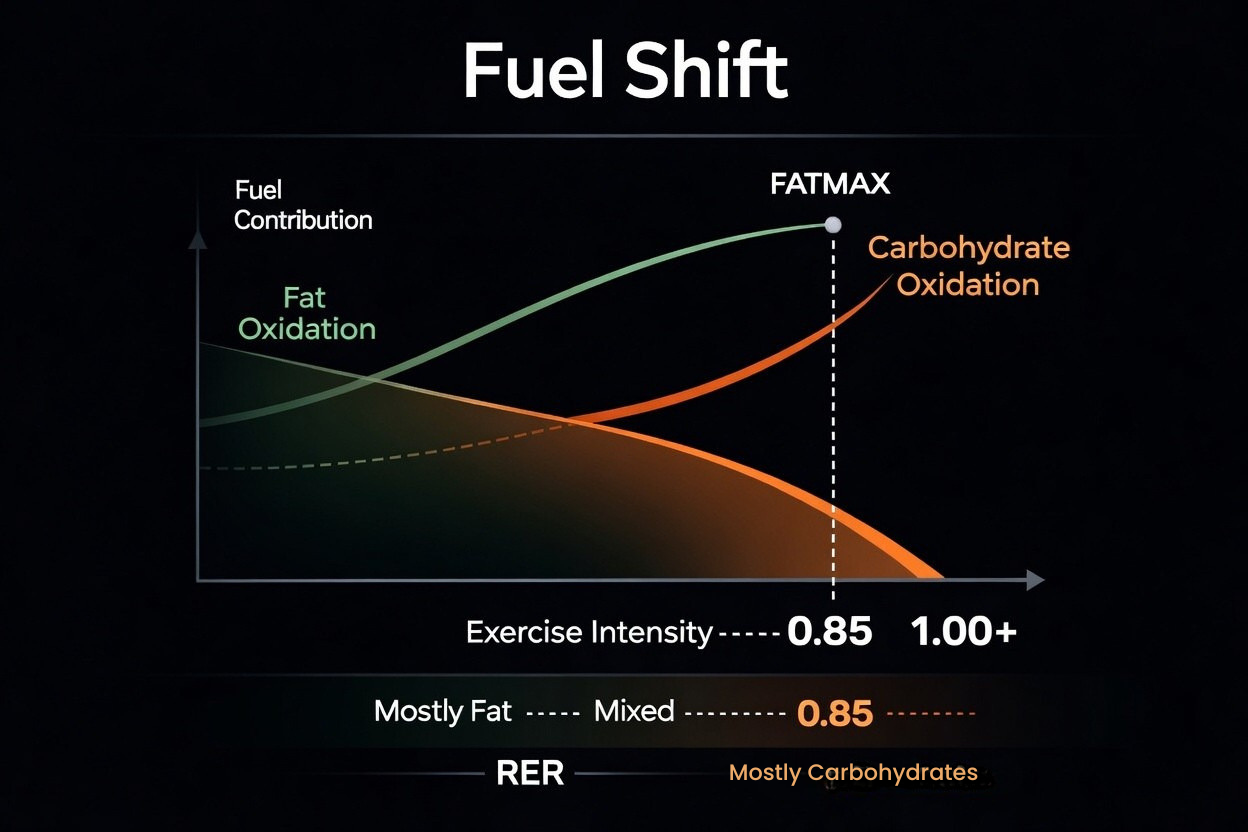
RER and FATMAX reveal when you rely more on fat, when you shift toward carbohydrate, and how training changes that profile.
FATMAX identifies the intensity where fat oxidation peaks. RER shows the real-time balance between fat and carbohydrate use. As exercise intensity rises, the body shifts from relying more heavily on fat toward relying more heavily on carbohydrate.
That shift matters. It influences endurance pacing, nutrition strategy, metabolic flexibility, and how easy aerobic training should be targeted. FATMAX and RER turn “zone 2” from a vague concept into a measurable metabolic target.
Peak VO₂ tells you the size of the engine. FATMAX and RER show how that engine is fueled.
FATMAX = intensity of peak fat oxidation
RER shows your fuel mix in real time
Useful for endurance, fueling, and metabolic training
Makes low-intensity training more precise
Assessment Is Powerful. Tracking Is Transformational.
Direct measurement turns one test into a system for personalizing training, proving progress, and setting a new standard for fitness and wellness.
One assessment is informative. Repeated assessment changes behavior.
Direct breath analysis measures the physiology that heart rate, pace, and power can only estimate: VO₂, VCO₂, thresholds, and fuel use. Re-testing after a training block shows whether those metrics actually improved, updates training zones, and replaces guesswork with evidence.
This should become the new standard. Athletes should know their peak VO₂, thresholds, and FATMAX. Coaches and trainers should prescribe from measured physiology. Gyms and performance centers should prove progress, not just effort. Wellness clinics should treat cardiorespiratory fitness as a measurable health marker worth tracking over time.

Assess directly

Personalize zones and targets

Re-test after meaningful training blocks

Make measured progress the expectation